
A clear list of the property, maintenance, improvement and appliance documents worth keeping throughout your ownership.
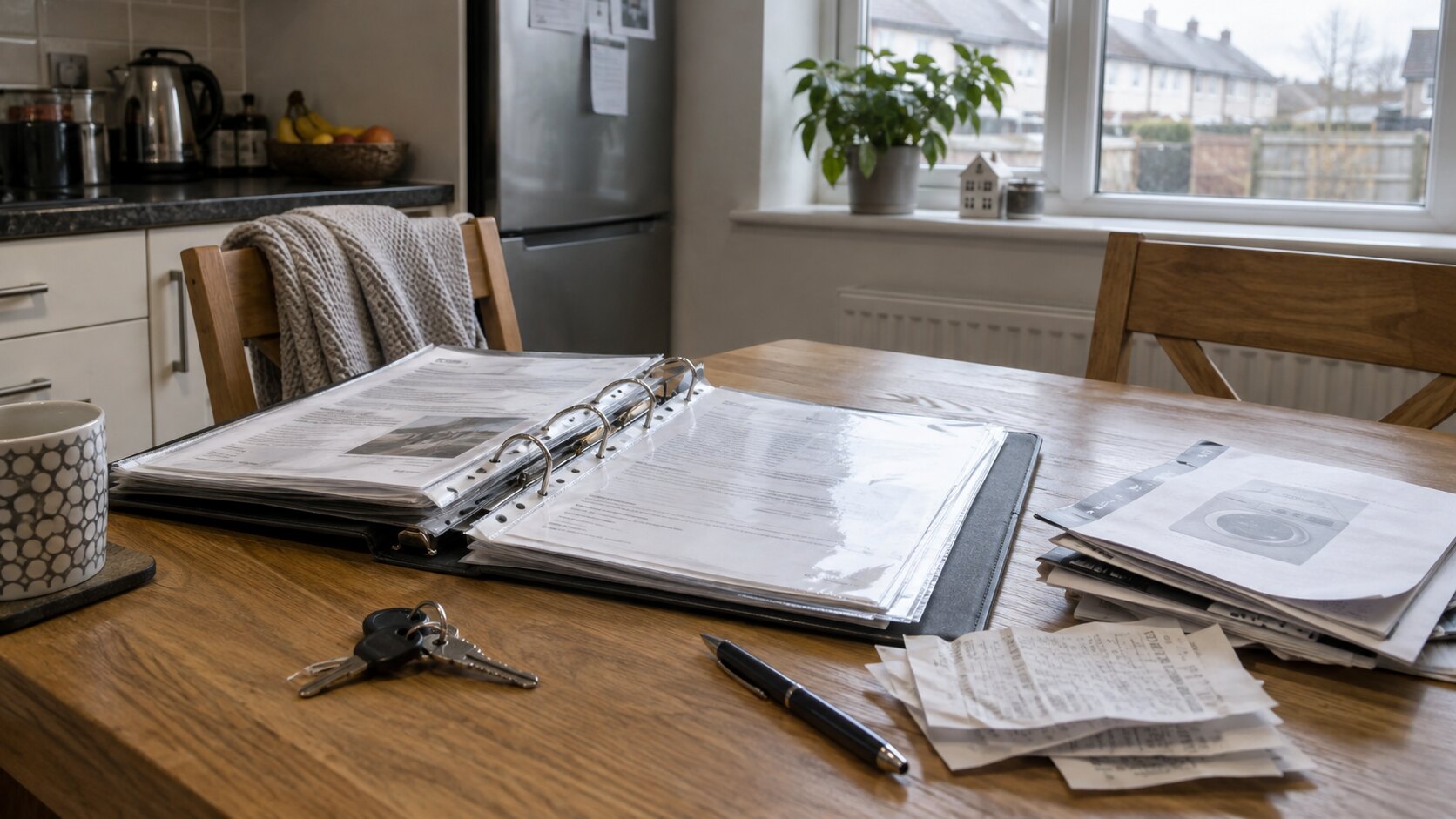
Keep ownership and purchase papers, approvals, certificates, surveys, warranties, manuals, service records, invoices and evidence of repairs or improvements. Organise them by property area or system and retain the latest version without discarding useful history.
Home information is most useful when it can be found quickly and understood in context. A complete record helps with maintenance, insurance, improvements and a future sale. Keep secure originals where required and create organised digital copies for everyday reference.
Keep quotations, contracts, invoices, specifications, photographs and guarantees. Photograph work before it is covered—such as pipe routes, wiring, insulation and structural components—without compromising site safety.
If you choose to create your own record, keep a file system using consistent names and dates. Connect each document to the relevant room, system, appliance or project. Record who produced it and whether it expires or creates a future maintenance obligation. Back up digital records and protect documents containing personal or financial information.
Your solicitor will advise what must be supplied during a sale. Beyond the formal requirements, clear manuals, servicing history, approvals and project records can help the next owner understand the home. Remove personal, financial and unrelated information before sharing anything.
Keep originals where they have legal, warranty or evidential value. Digital copies make everyday access easier but may not replace an original document.
Keep important approvals, certificates, guarantees and project records for as long as they remain relevant to the property, including after a warranty ends.
Share relevant property information through the appropriate sale process, but remove personal, financial and security-sensitive information first.
Browse more practical guidance or return to the Guidance Centre to explore every topic.
An Autumn Home Maintenance ChecklistEssential Checks When Buying a HomeHow Often Should a Boiler Be Serviced?Explore the Verh app